
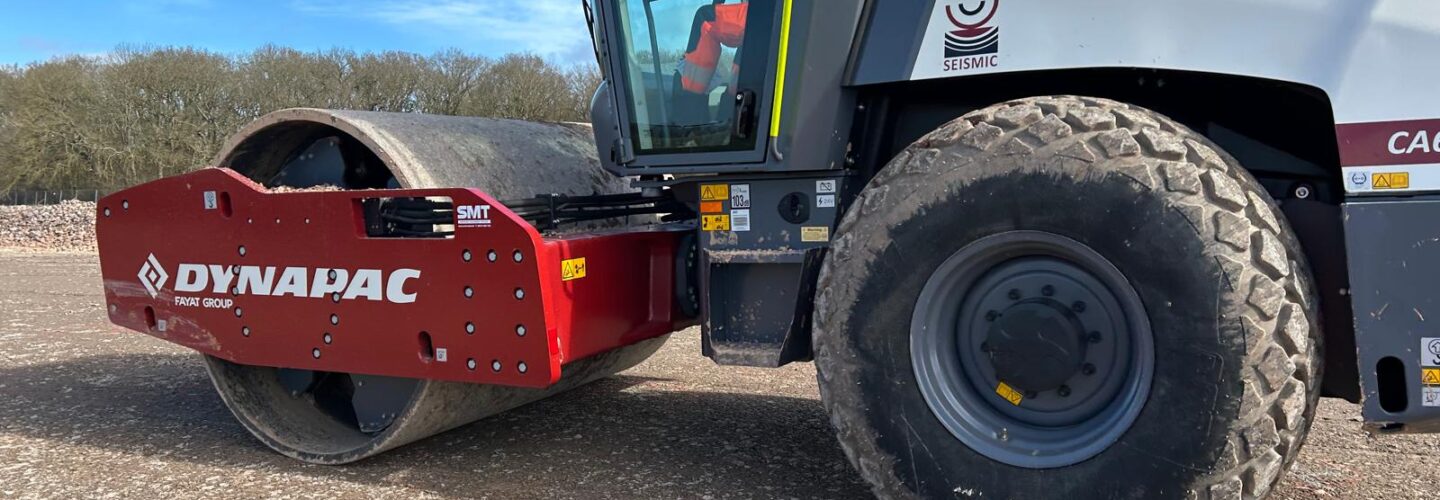
What if your roller could automatically adjust to the ground beneath it?
Better compaction is not achieved by applying more force, rather applying the right force at the right time. Dynapac’s patented seismic technology continuously adapts to changing ground conditions, helping operators achieve consistent compaction results, while reducing fuel consumption and emissions.
Around 30% lower fuel consumption demonstrated during a comparative HS2 trial with BBV
The challenge – getting compaction right
More force does not always mean better compaction
Every material responds differently during compaction. The challenge for contractors is finding the optimum balance: applying enough energy to achieve the required result, without wasting fuel or disturbing the material.
Applying too little energy can leave material insufficiently compacted. Applying too much can waste fuel, increase wear and, in some applications, affect material performance.
This is especially important for applications such as rail infrastructure, where the ballast has strict compaction requirements to maintain performance over the long term.
It’s not a question of “How much energy can we apply?” but “How accurately and efficiently can we transfer energy into the ground?”
What is Dynapac seismic technology?
A roller that adapts automatically to ground conditions
Dynapac seismic technology is designed around a simple principle: every material has a natural or resonant frequency. When the drum vibration matches the response of the material, energy transfer becomes more efficient.
Dynapac’s patented system uses sensors and intelligent electronic control units to measure the ground’s response five times per second and automatically adjust the drum frequency to match. The operator does not need to make adjustments. The machine continuously optimises the vibration while working.
How does it work?
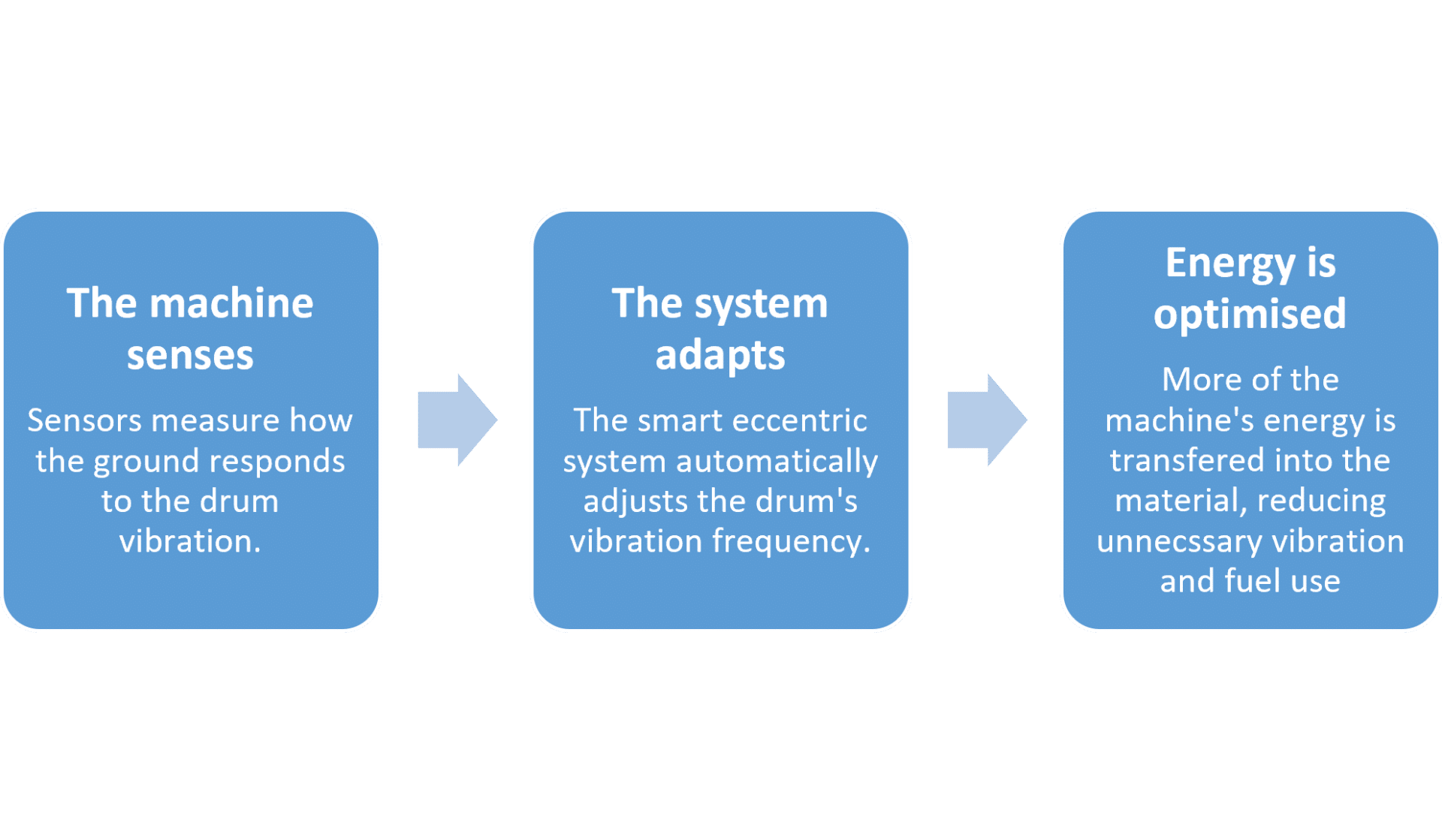
Unlike conventional systems that apply a fixed vibration setting, seismic technology responds to changing ground conditions throughout the compaction process.
As the material reaches the desired level of compaction, the system reduces unnecessary vibration and engine demand rather than continuing to apply energy that is no longer needed.
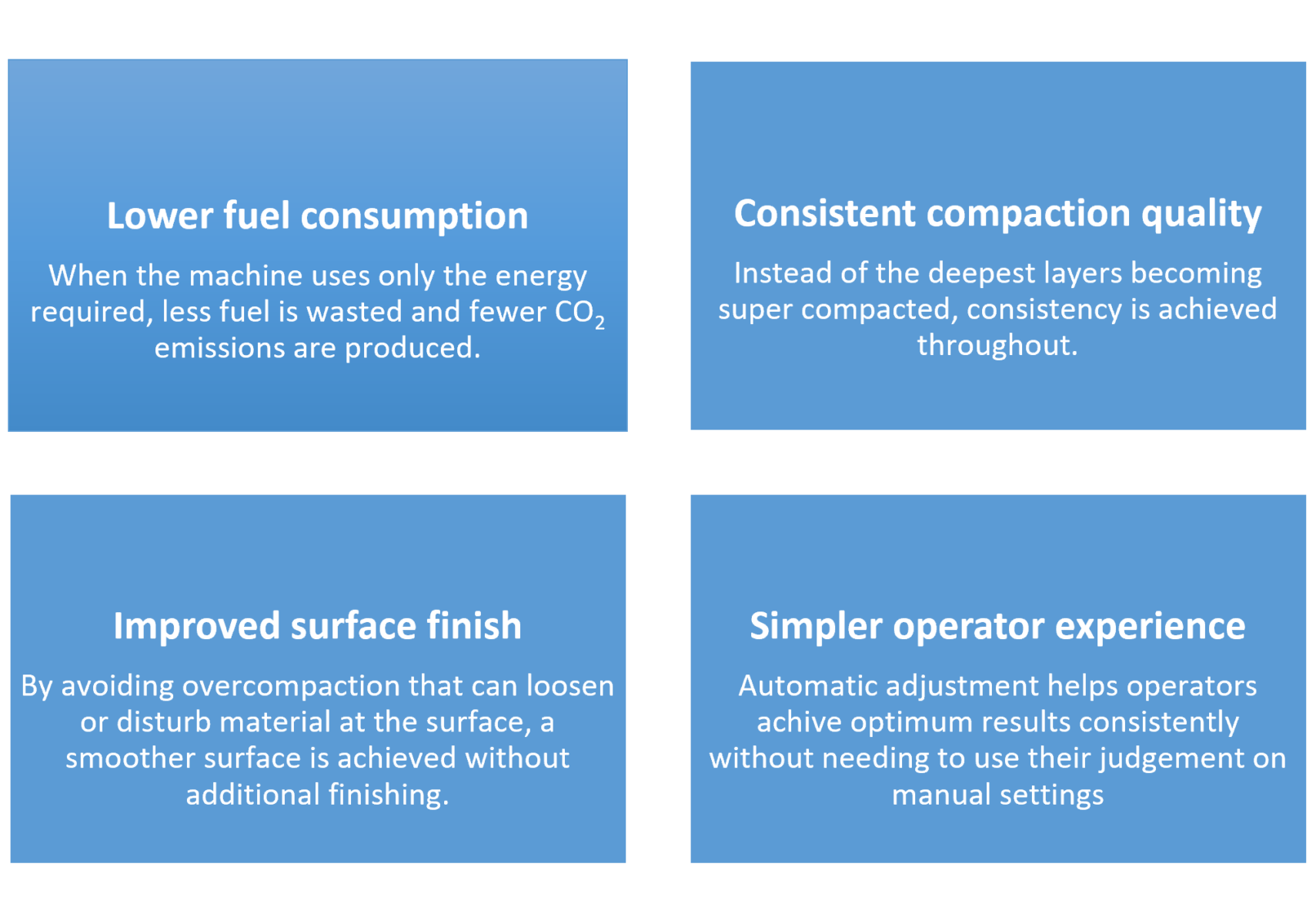
What are the benefits for contractors?
Putting seismic technology to the test on HS2
To demonstrate the benefits of seismic technology in real-world conditions, Dynapac carried out a trial with BBV on the HS2 project near Birmingham as rail infrastructure projects demand high levels of precision, with strict requirements around material performance and quality control.
The comparative trial assessed a Dynapac CA6000D SEISMIC roller alongside an equivalent 19-tonne soil compactor.
The machines were tested under like-for-like conditions:
✓ Same material
✓ Same operating area
✓ Same number of passes
✓ Same amplitude settings
✓ Compaction measured using nuclear density gauge testing
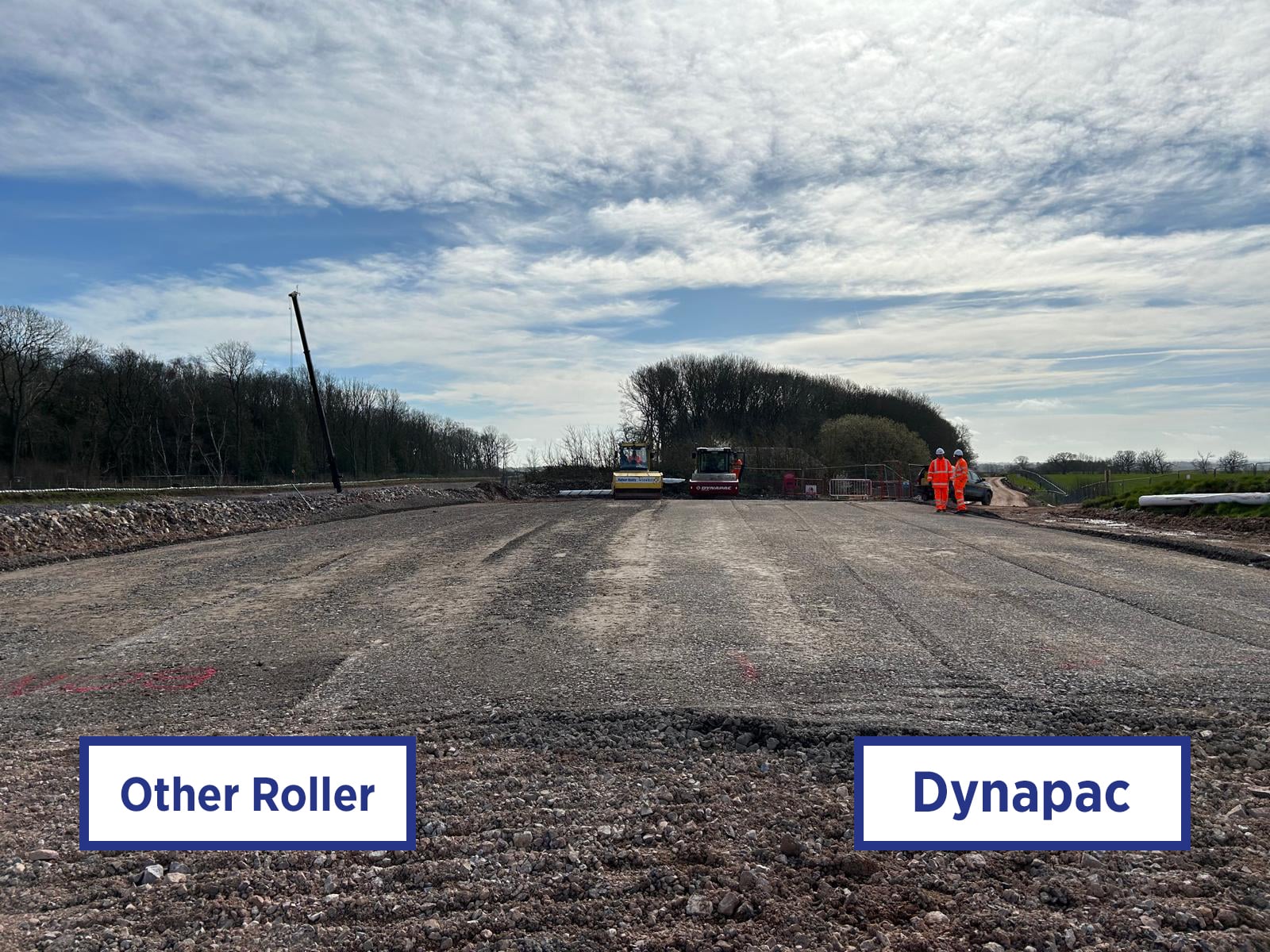
Key results
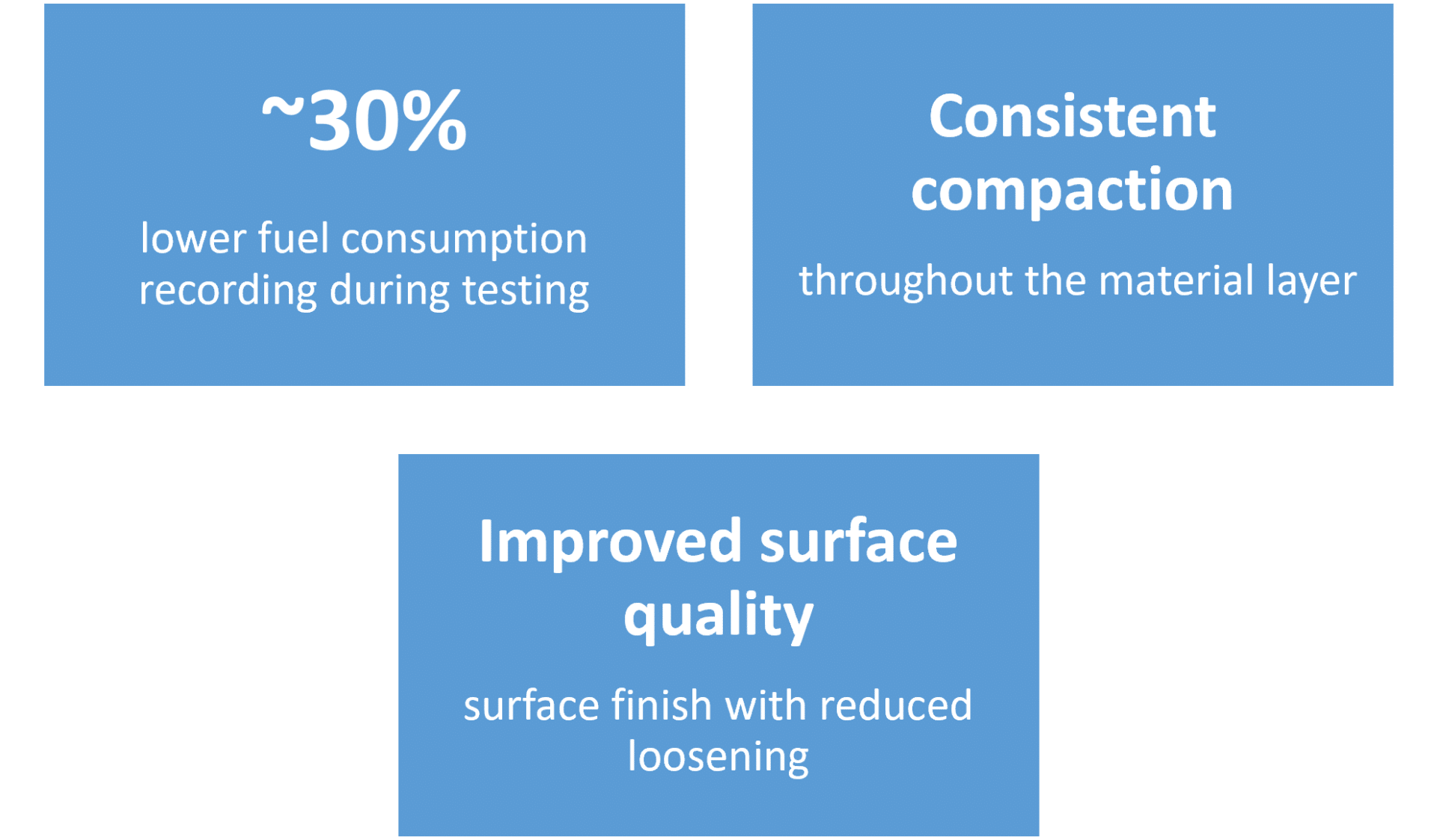
The results demonstrated that seismic technology can help contractors achieve the required compaction performance, while using energy more efficiently.
“Our priority was to determine whether the roller could consistently achieve the compaction standards required for an HS2 formation layer under live site conditions. The trial demonstrated that it met those requirements while also delivering a high-quality surface finish.”
Efficiency beyond fuel savings
Making every pass count
For contractors, efficiency is about more than completing a job quickly. It means:
- achieving quality requirements first time
- reducing unnecessary fuel consumption
- lowering emissions
- supporting operators to deliver their best work
- maximising machine productivity
Dynamic seismic technology helps make every pass more effective by ensuring the machine applies the energy the ground actually needs.
Want to see what seismic technology could do for your operations?
Dynapac seismic technology is a standard feature on Dynapac soil rollers from SMT GB.
Speak to our team to learn more about how smarter compaction can help improve efficiency, quality, and productivity on your next project.
See Dynapac SEISMIC technology put to the test.
Read about the recent comparative trial on HS2 and the results recorded in real working conditions.